
Every week, another article warns that artificial intelligence is making everything look the same.
The images blur together.
The writing flattens.
The ideas recycle.
According to the internet, AI is responsible for a global outbreak of sameness.
There's one problem with that argument.
Humans were doing a remarkable job of this long before the machine arrived.
Before ChatGPT generated its first paragraph, social media had already turned conformity into a competitive sport. Millions of people pursued individuality by becoming increasingly identical.
The same lips.
The same kitchens.
The same neutral living rooms.
The same poses.
The same quotes in white text over a blurry sunset.
At one point, entire friend groups started looking like different versions of the same person.
Entire aesthetics condensed into a single look that spread across continents in a matter of months. Not because anyone forced it, but because people copy what appears successful. They always have.
No algorithm whispered that you'd feel better with someone else's face. People made that choice. Freely. Repeatedly.
A generation spent years trying to look unique by looking exactly like everyone else.
AI didn't create that behavior.
It learned from it.
That's what makes the current conversation so revealing.
When people complain that AI-generated content feels repetitive, they're overlooking where the machine received its education. It was trained on us. Our writing, our images, our aesthetic instincts, our habits, and our enthusiasm for taking something distinct and turning it into a template.
AI functions less like an inventor and more like a mirror.
And mirrors have a habit of reflecting things we'd rather blame on someone else.
For decades, we assumed access to information would produce more original thinkers.
Instead, something unexpected happened.
We gained more access to more knowledge than any civilization before us.
More books.
More experts.
More courses.
More podcasts.
More perspectives.
Yet many people seem increasingly reluctant to think for themselves.
Consuming ideas turned out not to be the same as forming them.
Repeating an opinion isn't the same as arriving at one.
The internet solved access.
It never solved thinking.
Now that the tools are broadly available, the calculus has shifted.
The advantage was never going to stay with access for long.
What remains, what has always mattered and is now simply harder to ignore, is judgment.
Taste.
Perspective.
The ability to notice something others walked past.
That's why two people using the same AI can produce completely different work.
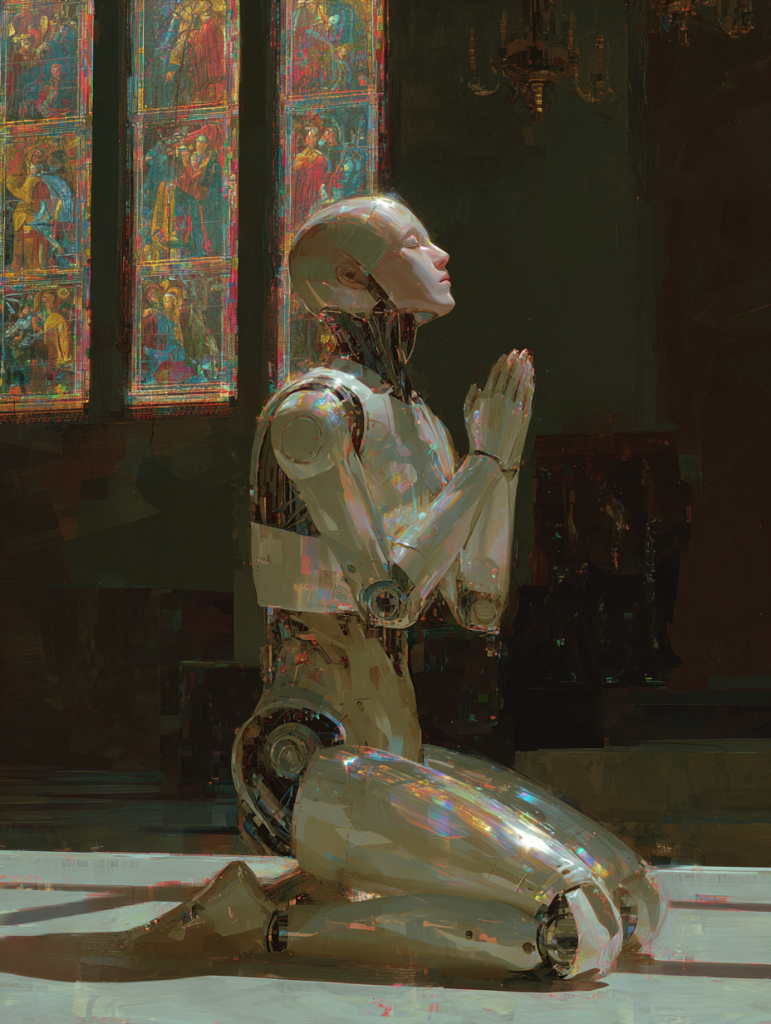
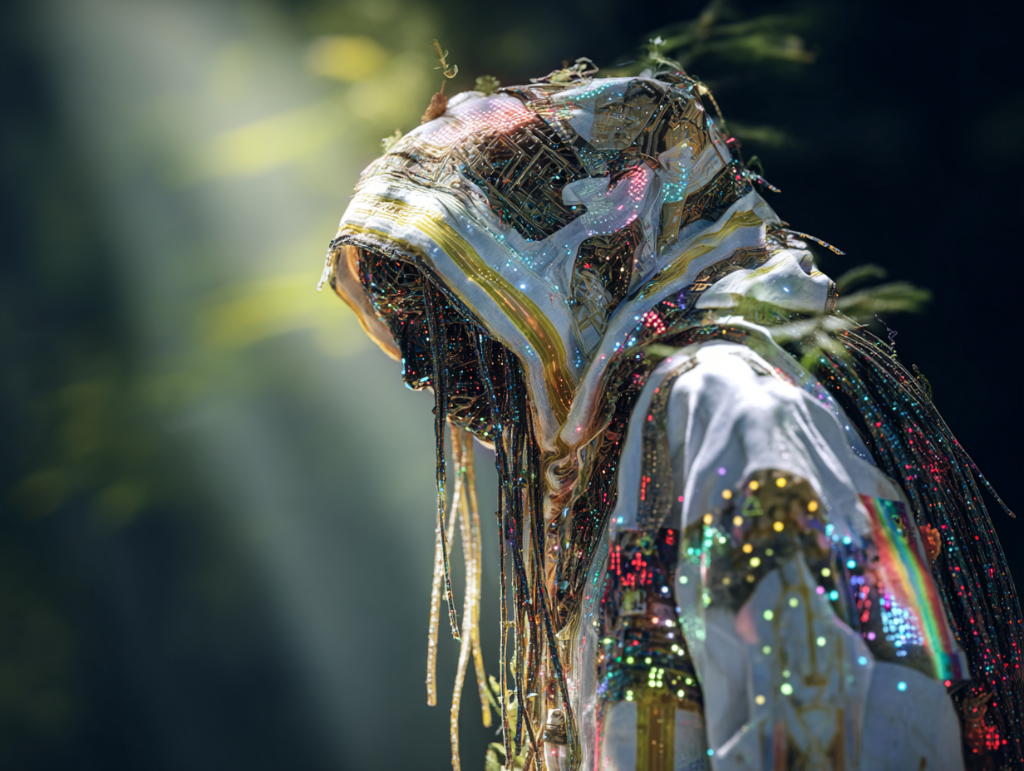
One generates another futuristic city glowing in neon blue.
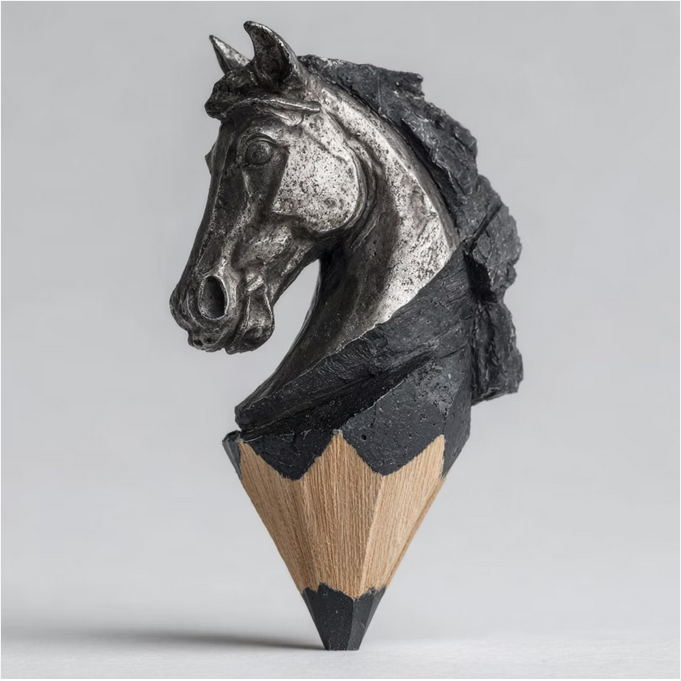
The other creates something that feels genuinely new.
The technology is identical.
The difference is the person using it.
Which brings the uncomfortable possibility into focus.
AI didn't create sameness.
It exposed how much of it already existed.
The machine learned from billions of examples of human behavior.
If the outputs feel repetitive, the machine isn't malfunctioning.
It's reporting back what it found.
The most unsettling thing about artificial intelligence isn't that it behaves like a machine.
It's that it behaves like us.
If originality feels rare right now, it isn't because AI destroyed it.
It's because AI revealed how rare it already was.
And left the question of what to do about that entirely to us.