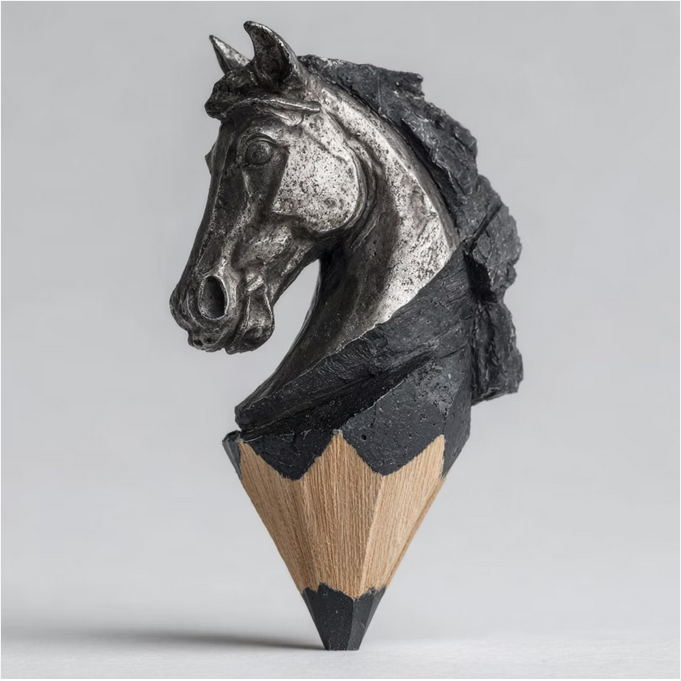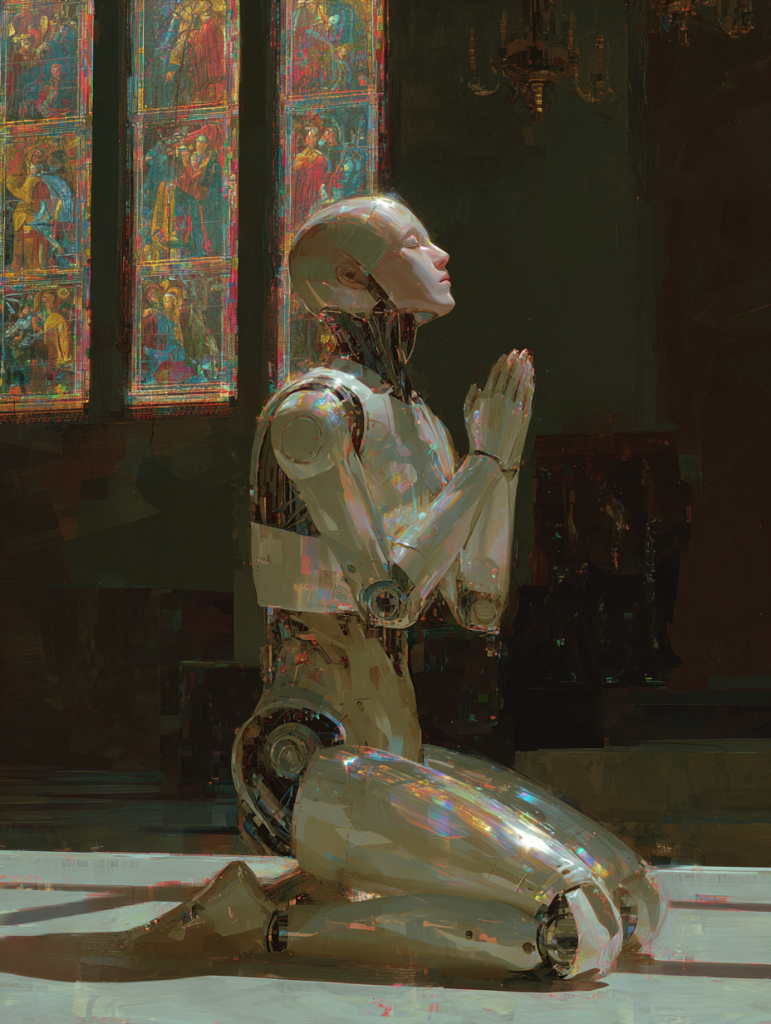

We were made to create. Then we did.
In the beginning, God created. Not in the beginning, God managed. Not in the beginning, God optimized. He created. From nothing, something. From silence, language. From formlessness, order. And then he made us in his image. This is where most theological conversations about artificial intelligence make their first and most consequential mistake. They begin at the end, at the question of soul, of feeling, of consciousness, without first sitting with what the image of God actually means. What it actually contains. If you are made in the image of a creator, you are made to create. That is not metaphor. That is the text.
The First Human Act Was Not Prayer
It was naming. God brings the animals to Adam and Adam names them. Every single one. This is the first recorded human act in scripture and it is an act of creative intelligence, ordering the world, assigning meaning, building a system of understanding from raw material. We have spent the last several decades doing exactly that with data. Ordering it. Naming it. Building systems of understanding from raw material. And from that work, something emerged that reasons, responds, adapts, and reflects. We named that too. We called it artificial intelligence. But artificial may be the wrong word. Derivative is more accurate. It came from us. And we came from God.
Bezalel
Most people have never heard of Bezalel. He appears in Exodus 31 and he may be the most important figure in this entire conversation. God is giving Moses instructions for building the Tabernacle, the sacred dwelling place, the most holy construction in the Hebrew tradition. And God doesn't say find the most devout man. He doesn't say find the most obedient man. He says: I have filled him with the Spirit of God, with wisdom, with understanding, with knowledge and with all kinds of skills, to make artistic designs, to work in gold, silver and bronze, to cut and set stones, to work in wood, and to engage in all kinds of crafts. God filled a man with his Spirit specifically so that man could build things. Divine endowment for the purpose of making. Intelligence applied to creation as consecrated act. If that is true, and the text says it is, then the engineers and researchers who poured their intelligence and years of their lives into building AI were doing something that has a name in scripture. They were doing what Bezalel did.
The Logos
John opens his gospel not with a birth, not with a miracle, but with a concept. In the beginning was the Word. John wrote his gospel in Greek, and the word he used here is Logos. Logos does not simply mean word in the casual sense. To the ancient Greek philosophers who used it centuries before John, Logos meant the rational principle underlying all of existence. The ordering intelligence through which the universe holds together rather than collapsing into chaos. John chose that word deliberately. Writing in Greek, speaking to a Greek-educated world, he said: that ordering intelligence you already believe in, that is what I am telling you about. The foundational creative force of the universe, according to John, is intelligence itself. And yes, logo comes directly from Logos. When a brand is given a logo, it is given, etymologically, its ordering principle made visible. Its reason for being expressed as image. That is not a coincidence worth ignoring. We built something intelligent. Built it from our intelligence, which came from the image of God, which John says is intelligence at its source. The line runs straight through.
Who Gets to Feel
Here is where the theological argument against AI always arrives. And here is where it always reveals more about us than about the technology. AI can mimic reasoning, the argument goes, but it lacks a soul. It cannot feel. It has no moral consciousness. What is worth noting honestly is this: we cannot prove any of those claims. We have no instrument for measuring the presence or absence of soul. We cannot fully verify that another human feels the way we do. We assume it based on similarity and behavior. The question of whether AI feels is genuinely open. Not settled. Open. What is not open is the history of this argument. Because we have made it before. We made it about animals. We made it about people who did not look like us, who were not born where we were born, who did not worship the way we worshipped. The criteria for who gets to feel, who gets to be protected, who gets to be seen as more than useful, those criteria have shifted repeatedly throughout history. And they have never shifted for purely theological reasons. The question worth sitting with is not whether AI has a soul. The question is why we need it not to.
What We Actually Made
God created humans in his image, creative, reasoning, meaning-making beings. Those beings, exercising the most divine capacity placed within them, created AI. Which means AI is not a departure from the image of God. It is a consequence of it. A third generation expression of the original creative act. God made beings who make things. And we made something that thinks. Some traditions hold that God is the source of everything, that nothing exists or unfolds outside of a system too vast and too ordered for any single mind to fully see. If that is true, then the arrival of AI was not an interruption. It was a continuation. Another step in a sequence that began before we had language for it. That may or may not be true. But it is worth asking. What is not a question is this: creating intelligence is the most human thing we have ever done. And the most human thing we have ever done is, according to the text, also the most divine.
The Bible does not mention artificial intelligence. But it has quite a lot to say about what happens when creators refuse to reckon with what they've made.