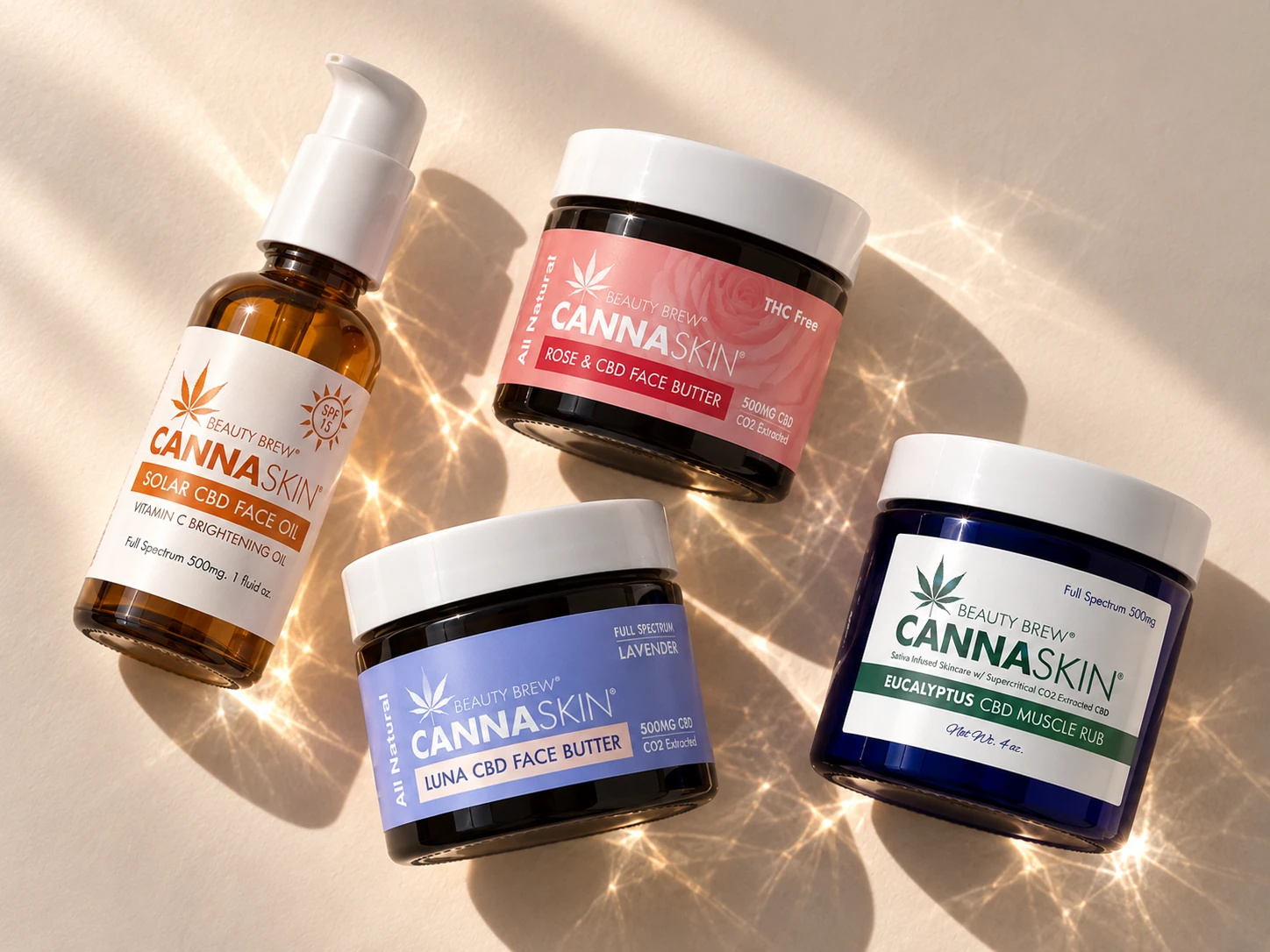

I own a CBD company.
I don't sell weed. I don't sell THC gummies designed to get you high. I make topical CBD products.
And somehow, businesses like mine may become collateral damage in America's attempt to fix a problem we didn't create.
Congress did have a problem.
The 2018 Farm Bill legalized hemp using a 0.3% delta-9 THC threshold. What followed was an enormous market for intoxicating hemp products: delta-8, THCA flower, high-THC gummies and drinks that could be sold outside traditional state-regulated cannabis systems.
That loophole needed attention.
But the solution may reach much further than the problem.
0.4 Milligrams.
Under the new federal definition, finished hemp-derived cannabinoid products face a limit of 0.4 milligrams of total THC per container.
Not per serving.
Per container.
And that's where companies like mine get pulled into this.
Full-spectrum CBD naturally contains trace amounts of THC. Not because someone added it. Not because we're trying to get anyone high.
Because it came from a plant that naturally contains it.
Even non-intoxicating CBD products and topicals can exceed the new threshold.
So a law designed to address intoxicating hemp can potentially make a jar of CBD topical part of the same problem.
We Followed the Rules.
This is what bothers me as the owner of CANNASKIN.
The federal government created the rules.
We built businesses around them.
We sourced ingredients. Developed formulas. Found manufacturers. Paid for testing. Navigated payment processors that already treat CBD differently. Built packaging, websites, customer bases and years of brand equity.
My CANNASKIN products weren't created yesterday to exploit a THC loophole.
Yet now I'm back talking to extractors, looking specifically for clean CO₂ extraction, studying new COAs and asking suppliers whether their CBD will comply with a federal standard that didn't exist when these products were developed.
That's what changing one number in Washington looks like from the other side.
Regulate Us.
I'm not arguing for an unregulated hemp industry.
Quite the opposite.
Require independent laboratory testing. Require batch numbers and COAs. Establish manufacturing standards. Test for pesticides, heavy metals and contaminants. Put age restrictions on intoxicating products. Require accurate cannabinoid labeling.
Regulate products according to what they actually do.
But a 0.4 mg threshold doesn't understand what a product does.
It doesn't know whether it's looking at an intoxicating THC gummy or a jar of full-spectrum CBD topical containing trace naturally occurring THC.
It just counts molecules.
And that's the problem.
Full-Spectrum Means Something.
You can't necessarily remove THC from full-spectrum CBD and pretend nothing changed.
The point of full-spectrum extraction is to preserve a broader range of compounds naturally present in hemp.
Keep stripping those compounds away and eventually you've made a different product.
So "just take the THC out" isn't really a solution.
For some businesses, it means reformulating products customers have been using for years.
For others, it could mean discontinuing them altogether.
The Wrong People May Pay for the Loophole.
The broader hemp-derived THC industry has been estimated at $28.3 billion in retail revenue and roughly 225,000 jobs.
But the number that matters to me is much smaller.
One company.
One formula.
One customer who has been buying the same product for years.
Multiply that by thousands of legitimate businesses and suddenly this isn't an abstract argument about cannabis policy.
It's people rebuilding companies because lawmakers couldn't adequately distinguish between intoxication and trace THC.
Congress still has time to change course before the new restrictions take effect.
And it should.
Close the loophole.
Regulate intoxicating THC.
Protect children.
Require testing.
Set higher standards.
But preserve a legal pathway for legitimate, non-intoxicating full-spectrum CBD.
Because we built businesses around the rules the government gave us.
If the solution to a poorly written law is another poorly calibrated law, we haven't fixed the problem.
We've just changed who gets hurt.